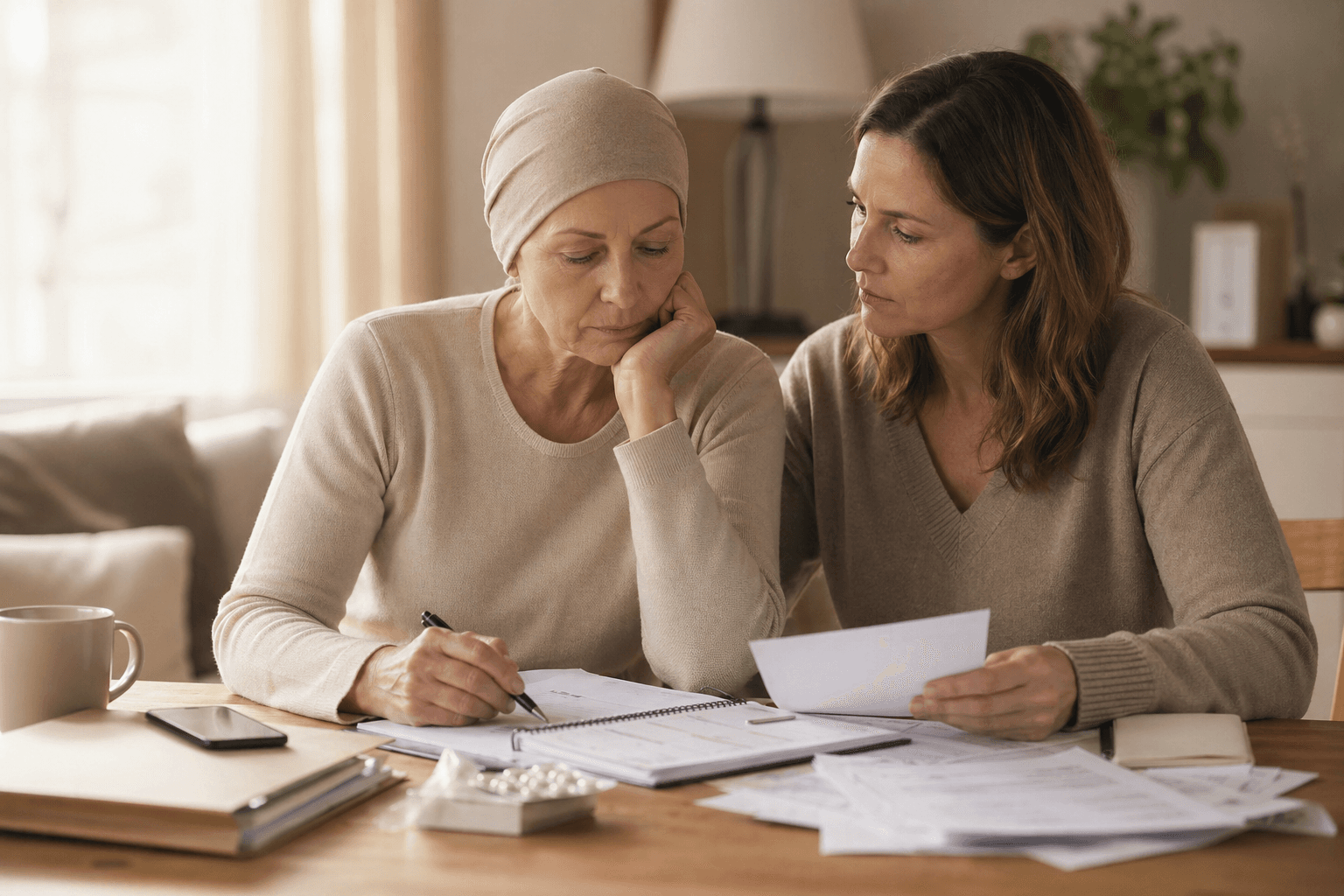
Falling ill is not just suffering. It is having to manage everything? at the worst possible moment.
A diagnosis comes down.
And with it, a brutal reality: life does not stop, it becomes more complicated.
Very quickly, beyond the illness itself, another ordeal begins.
Silent, exhausting, often underestimated: the ordeal of all the procedures.
A burden added to illness
Making appointments.
Understanding medical reports.
Filling in administrative files that are sometimes impossible to understand.
Following up, waiting, starting again.
Every step requires energy. Energy you no longer have.
Because being ill also means this: moving more slowly, doubting more, getting tired faster. And yet the system does not slow down.
The number of people involved multiplies.
Information becomes fragmented.
Delays grow longer.
And the patient, like their loved ones, ends up having to coordinate a complex, technical, sometimes opaque path alone.
Illness never affects just one person
We should be clear about this: illness always affects more than one person.
The family worries.
They try to understand, to help, to do the right thing.
But they too run into complexity, a lack of clarity, and emotional fatigue.
Very often, they become, despite themselves, managers, coordinators, and moral support? without being prepared for it.
And in many cases, it is not the illness alone that wears people down. It is everything that has to be organized around it.
This is where everything is decided
Because in those moments, it is not only about receiving care.
It is about not becoming exhausted, neither alone nor together.
Falling ill should never mean becoming the manager of a complex system.
It is precisely in response to this reality that Oppenheimer Conseil, under the impetus of its president Rodolphe Oppenheimer, developed within its consulting activity a dedicated healthcare unit.
Our role is not medical.
It is organizational, strategic, and human.
At Oppenheimer Conseil, we step in where everything becomes confused, in order to restore clarity, method, and connection, for the patient as well as for their loved ones.
In concrete terms, we support every stage of the process
- Preparation and follow-up of medical and administrative files.
- Verification and completeness of documents.
- Organization and coordination of appointments.
- Rigorous follow-up of procedures over time.
- Structuring of a path that is often fragmented.
- Support for loved ones so they can help without wearing themselves out.
Lightening the mental burden
But ultimately, the essential point lies elsewhere.
Being supported means lightening a mental burden that has become too heavy.
It means no longer having to carry everything alone.
It means allowing the family to remain in its proper place: present, supportive, without being overwhelmed.
It means being able to refocus on what truly matters: receiving care, recovering, enduring? together.
In a demanding healthcare system, where the smallest mistake or omission can slow down a pathway, this coordination becomes a real lever for efficiency, but also for peace of mind.
Because illness makes people vulnerable.
And within that vulnerability, neither the patient nor their loved ones should have to face complexity alone.
Getting support is not a luxury. It is often what makes it possible to keep going.
Rodolphe Oppenheimer
President ? Oppenheimer Conseil